
Global Experts Unite to Improve Livestock Disease Evidence for Africa and South Asia
Groundbreaking consultation brings together 130 experts from 33 countries to strengthen livestock health evidence synthesis.
The SEBI-Livestock and LD4D teams have concluded a highly successful three-week Livestock Disease Evidence Consultation that has generated outstanding collaboration among global veterinary and livestock health experts. The initiative, designed to enhance evidence synthesis approaches for livestock diseases in Africa and South Asia, showed enthusiastic engagement from the international community.
Read the workshop summary report
Participation Drives Innovation
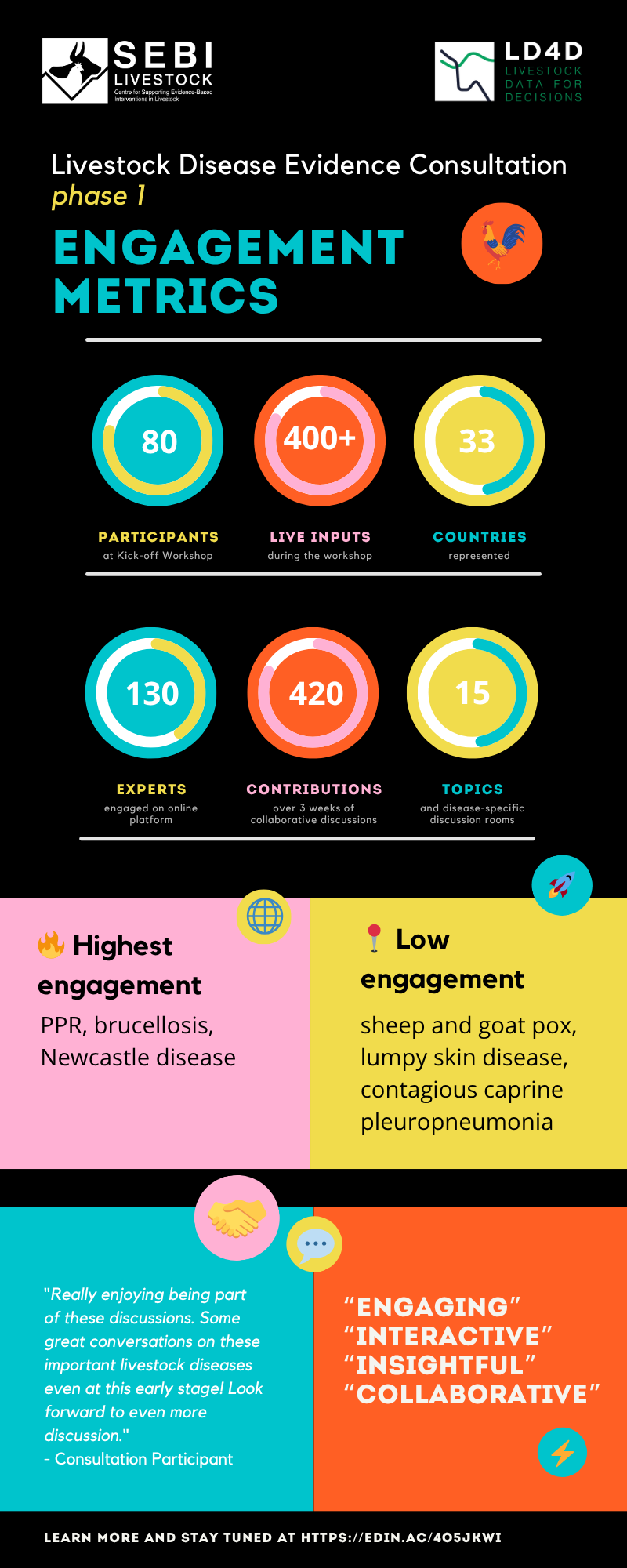
The consultation achieved significant participation metrics, demonstrating the urgent need for collaborative approaches to livestock disease evidence: 130 expert participants from 33 countries engaged across the platform 420+ contributions were shared during online discussions 80 participants attended the kick-off workshop, generating 400+ live inputs 15 discussion topics covered critical livestock diseases Strongest engagement focused on PPR (peste des petits ruminants), brucellosis, and Newcastle disease
Key Evidence Gaps Identified
The consultation revealed critical areas where enhanced evidence synthesis is most needed:
Epidemiological Data: Experts emphasized the urgent need for comprehensive seasonal and geographic disease data, particularly from underreported rural regions, along with improved diagnostic assay performance information.
Treatment and Prevention: Participants highlighted gaps in real-world vaccine effectiveness data, treatment resistance patterns, and evidence on alternative intervention strategies under field conditions.
Socio-Economic Context: The consultation identified significant knowledge gaps around gender dynamics, cultural practices in disease management, livestock movement patterns, and economic impact assessments—particularly affecting smallholder farming communities.
Vulnerable Communities at the Center
The expert discussions consistently emphasized that evidence synthesis must prioritize often-overlooked populations, including smallholder farmers and pastoralists with limited veterinary access, women and youth frequently excluded from livestock health decision-making, and marginalized nomadic communities facing systemic barriers to animal health services.
Impact Beyond Consultation
Participant feedback describing the initiative as “engaging,” “interactive,” “insightful,” and “collaborative” reflects the consultation’s success in creating a truly global community of practice. This collaborative approach has established new networks for knowledge exchange that extend far beyond the formal consultation period. The comprehensive insights gathered will inform evidence synthesis methodologies that better reflect real-world considerations across diverse geographic and socio-economic contexts in Africa and South Asia.
Looking Ahead
A detailed consultation report incorporating all expert contributions will be released in the final quarter of 2025, providing disease-specific insights for researchers, policymakers, and practitioners working in livestock health. This is just the start of the process! Once our evidence syntheses are complete, we’ll invite active consultation participants to join our results interpretation phase. This is a key opportunity to ensure findings are contextually relevant and actionable for real-world applications. The consultation represents a significant step forward in creating more inclusive, contextually relevant evidence bases that can drive effective livestock disease prevention and control strategies across some of the world’s most livestock-dependent regions.
More information
For more information about the livestock disease evidence synthesis initiative:
- Visit the Project page: Livestock Disease Evidence in LMICs
- Read the Workshop summary report
- Contact SEBI@ed.ac.uk.
Related content
SEBI-Livestock Engages at FAO PPR Socioeconomic Working Group Meeting in Nairobi
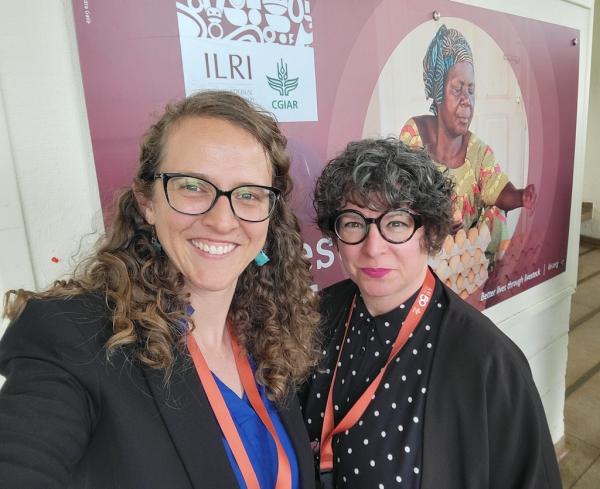
Our colleagues Julie Koehler, Katherine Dirsmith, and Fiona Allan recently took part in the Food and Agriculture Organisation of the United Nations (FAO) Peste des Petits Ruminants (PPR) Socioeconomic Working Group meeting, hosted at the Livestock Research Institute (ILRI) campus in Nairobi.